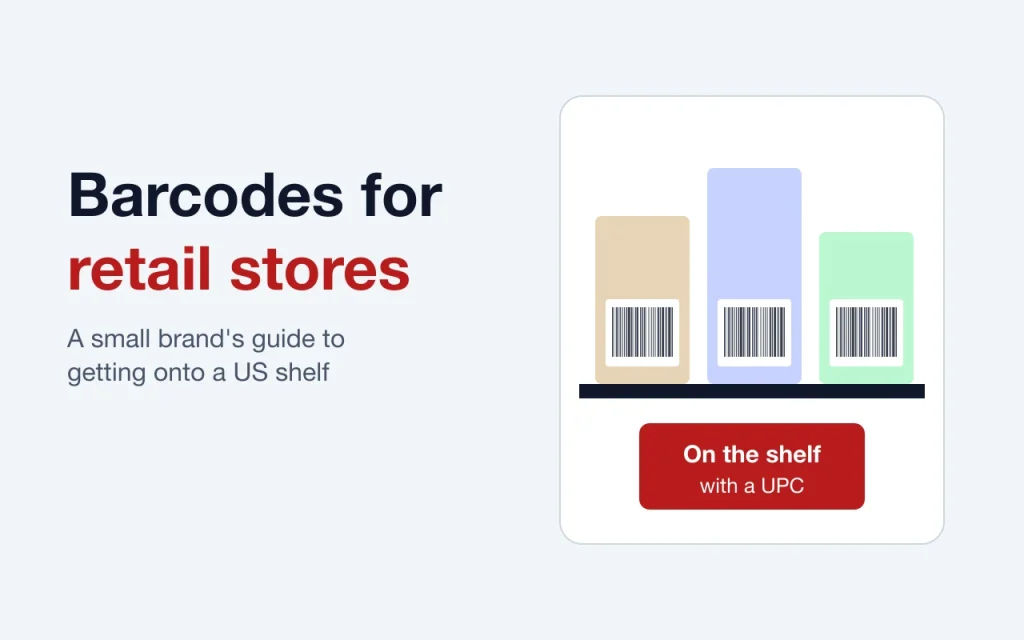
To sell a product in US retail stores, you need a 12-digit UPC for each version of the product, a barcode image of that number printed on the package, and a store that has entered your number into its system. Most chains expect the code to come from GS1 US in your company’s name. Smaller independent shops are often happy with any valid UPC. Buy the code before your packaging goes to print, because a late barcode is one of the most expensive mistakes a new brand can make.
This guide is for founders and small businesses getting their first product onto a shelf. We sell UPC codes online, so we’ll be plain about when our codes fit and when they don’t.
When a barcode becomes your problem
The usual story goes like this. The product is made, the packaging is designed, and a store buyer finally says yes. Then the buyer asks for the UPC, and nobody has one.
A store can’t ring up an item its system doesn’t recognize, so a barcode isn’t optional once you’re dealing with chains. The good news is that the fix is quick. You can have numbers the same day. The bad news is that the number has to appear on your packaging, so finding out late can mean stickers on every unit or a reprint.
Sort this out while the packaging is still a design file. A barcode needs a clear patch of about 1.5 inches by 1 inch, and it’s much easier to plan for it than to squeeze it in later.
What you’re actually buying
“Buying a barcode” means three separate things, and sellers often mix them up:
- The number. This is the part that costs money. You license it from GS1 US or buy it from a reseller.
- The image. This is the bars themselves, drawn from your number. It’s free or included.
- The print. It goes on your packaging or on a label, at your own cost.
Our guide to where to buy barcodes covers each of the three in more detail.
Why you can’t make up your own number
It’s the first question most people ask, and the answer is no. Every product on sale needs a number of its own. If you invent one, it may already belong to someone else’s product. At the register, your soap could ring up as a tin of beans. Store systems and marketplaces also reject numbers they can’t match.
GS1 runs the system that keeps those numbers unique. GS1 US issues them in the United States, and everything else in this market traces back to it.
GS1 or a reseller for retail?
This choice decides whether a chain will accept your code, so it’s worth getting right.
| GS1 US | Reseller | |
|---|---|---|
| Cost for one code | $30, no renewal | From a few dollars, no renewal |
| Cost for 10 codes | $250 + $50 a year (company prefix) | $15 to $30 |
| Registered to your company | Yes | No |
| Accepted by big chains | Yes | Often not |
| Good for independent shops | Yes | Usually, ask first |
A reseller sells numbers from company prefixes licensed before August 2002. A class action settlement freed those older prefixes from renewal dues, which is why they cost so little. The catch is the record. Look up a resold code and GS1 shows the company that first licensed the prefix, not you.
So here’s our advice, even though we sell the cheaper option. If a chain is your goal, buy from GS1 US in your company’s name. Ask the buyer before you pay anyone, because the buyer’s requirements are what count. If you’re selling to local shops, at markets and online, a reseller code is a fair deal. Our guide to barcode requirements for retail stores goes into what chains ask for.
The steps from no barcode to on the shelf
- Ask your buyer. Find out what the store needs before you buy anything: which code type, in whose name, and any labeling rules.
- Count your variations. Each size, color, flavor and pack size needs its own number. Two scents in two sizes means four codes.
- Buy your numbers. Keep a spreadsheet showing which number belongs to which product. You’ll need it for years.
- Get the image files. Use a vector file, such as EPS or SVG, for packaging, because it stays sharp at any size. Our free barcode generator makes these.
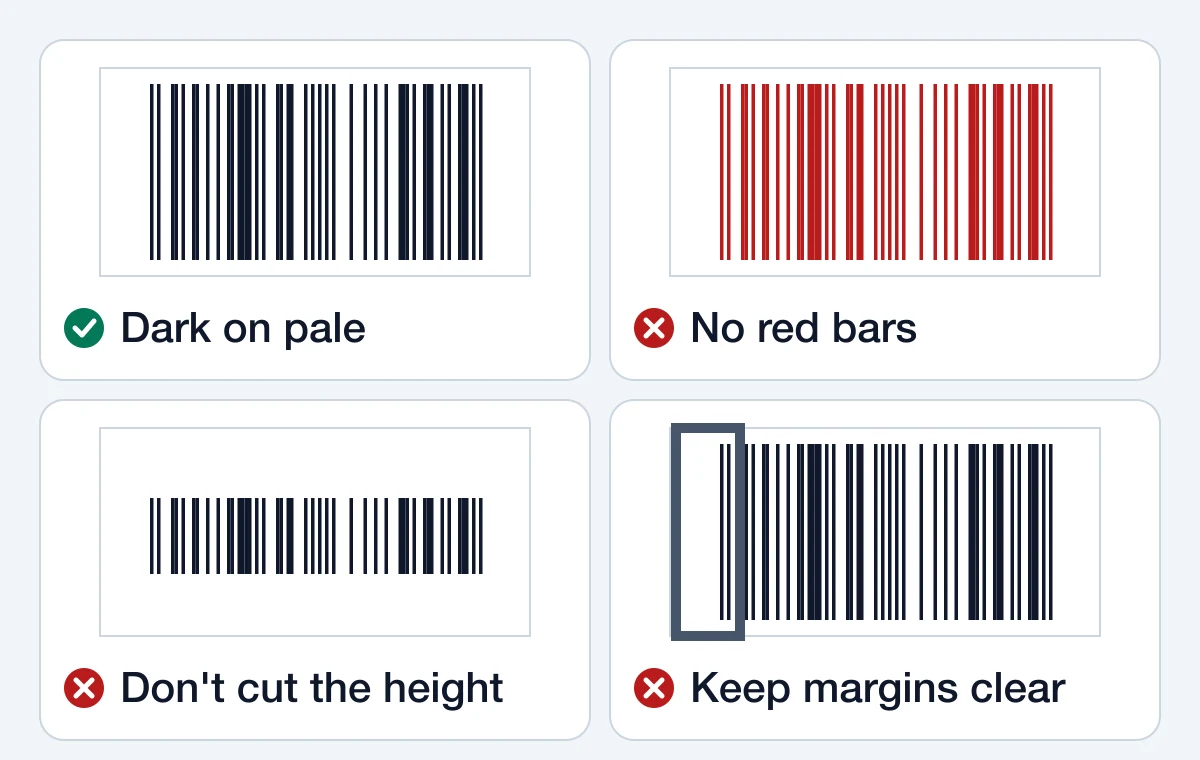
- Place the barcode in your design. Dark bars on a pale background, on a flat area, with blank margins on both sides.
- Print a test and scan it. Do this before the full run, on the real material.
- Give the store your product details. The store links your number to the name, size, description and price in its system. A sample scan confirms it all works.
Printing rules that keep a barcode scanning
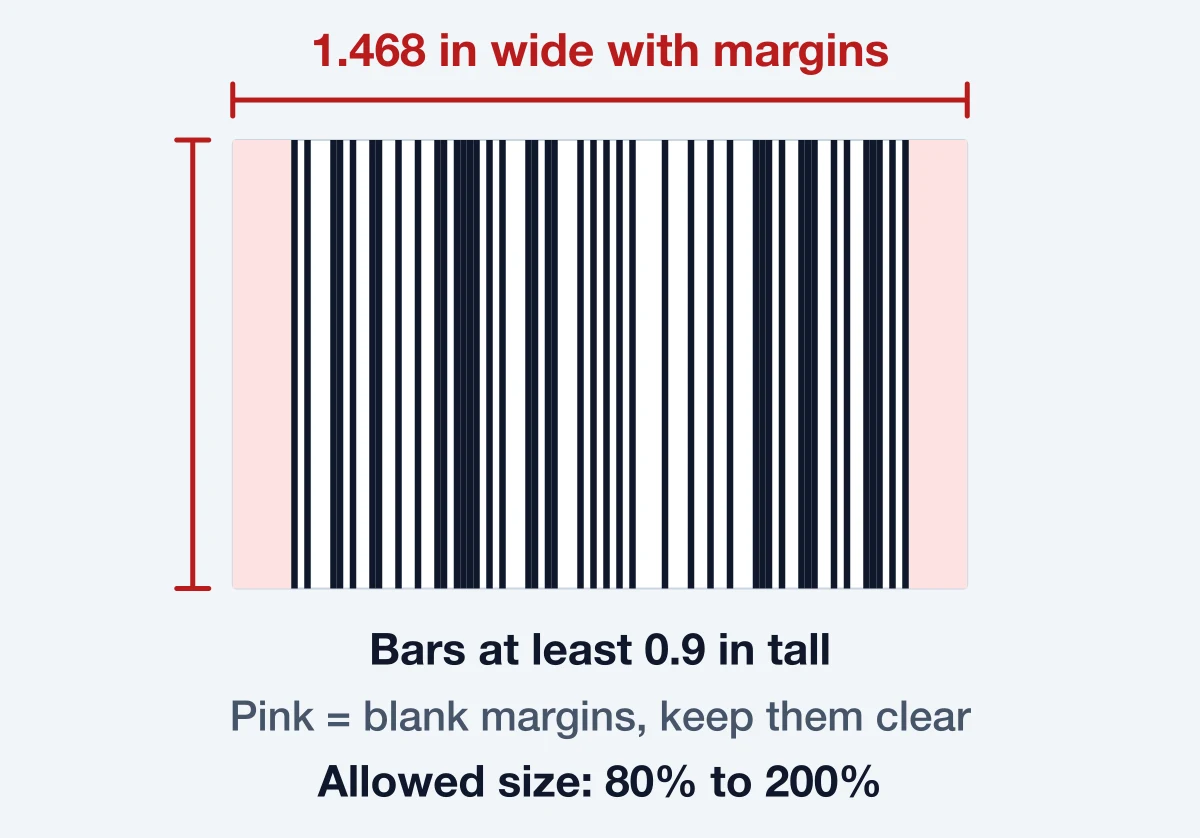
GS1 sets the standard here. A UPC can print between 80% and 200% of its normal size. At 100% it’s 1.468 inches wide including its blank margins, with bars at least 0.9 inches tall. Avoid red bars, since scanners that use red light can’t see them, and don’t cut the height to fit a tight label.
If you’re adding labels by hand, use a thermal or good laser printer and matte labels. Our barcode label generator lays out sheets for common label sizes.
What about Amazon and other online stores?
The same number works online and in stores, so you don’t need separate codes. But online channels have their own rules. Amazon checks product IDs against GS1 data, and Walmart Marketplace cross-checks identifiers with GS1. eBay, Etsy and Shopify generally just need a valid number, if they need one at all.
If you plan to sell in several places, let the strictest one decide. It costs far less to buy the right code once than to relabel stock later. The calculator below totals each option for your product count.
Your numbers
-
GetUPCCode
-
GS1 US single GTINs
-
GS1 US company prefix
Prices from GS1 US, checked October 30, 2026, and our current packs before coupons. A prefix shows a range because the last renewal may fall outside your years.
Common mistakes
- Printing packaging before you have a code. Stickers are a poor fix for a brand new product.
- Using one code for every variation. Stores can’t tell your sizes apart, and their stock counts go wrong.
- Buying from an unknown seller. You can’t tell whether a number has been sold before.
- Reusing an old code on a new product. A number stays with its product. Don’t recycle it when you change your line.
- Forgetting the record. Without a list of what’s assigned where, you’ll eventually use the same number twice.
Frequently asked questions
How long does it take to get a retail barcode?
The number can come the same day. Our orders usually arrive within 15 minutes, and within 6 hours at most. GS1 US sells online too. The slow part is packaging, so plan the barcode into your design from the start.
Do barcodes expire?
A UPC number doesn’t expire once it’s on your product. A GS1 company prefix does need its yearly renewal, though, to stay linked to your company. A GS1 single GTIN has no renewal fee.
Can I use the same UPC in every store?
Yes. A UPC identifies the product, not the store, so the same item carries the same number everywhere.
Can I buy a barcode for just one product?
Yes. GS1 US sells a single GTIN for $30, and we sell one code for $4.59. Which suits you depends on where the product will be sold.